
Package contents The FusionHDTV package contains the following items. Some packages may change depending on other conditions. ① FusionHDTV card ② Setup CD ③ Manual ④ Internal cable to sound card for External output Audio (7 RT GOLD/DVB-T pro only) Fusion Remote. FusionHDTV remote transceiver is basic option. Page 6: Software. Universal Audio UAD-2 Driver 5.6.0 Free Universal Audio UAD-2 DSP card and Powered Plug-Ins driver Updated: December 5 th 2017 182,983 total downloads 20 last week. TP-Link 10/100/1000Mbps Gigabit Ethernet PCI Express Network Card (TG-3468), PCIE Network Adapter, Network Card, Ethernet Card for PC, Win10 supported 4.7 out of 5 stars 5,979 $14.99.
This digital TV tuner from DViCO contains dual tuner capabilities and is a very neat piece of hardware. It's a PCI card and it only requires one antenna input for both of its tuners. This means there are aren't any messy pass-through cables or splitters required to use both tuners. Likewise, only one set of drivers is required to install it, unlike DViCO's previous dual tuner solution, which required a second driver and also that the second tuner on the card be connected to the PC via a USB cable.
Sound Card Driver: V5. For Windows XP 64-bit Edition 1. TV Card: Dvico FusionHDTV DVB-T Dual 1. TV Card Type: DVB-T 1. TV Card Driver: 3.41 2. Download REALTEK Sound Card drivers, firmware, bios, tools, utilities. Realtek Audio Driver 6.0.8945.1 for Windows 10 64-bit 8 downloads. Sound Card REALTEK. Windows 10 64 bit. Feb 1st 2021, 00:13 GMT. Gigabyte B450 AORUS M (rev. 1.x) Realtek Audio.
While the hardware is neat, the software solution is not ideal. DViCO's FusionHDTV software (we used the latest version at the time of writing - 3.50.02) can not use both tuners transparently. If you are recording one program you can't change channels on the other, nor can you toggle from the main window to the PIP window..That means if you want to watch one program and record another, you must have the program you want to watch on the correct channel in the main window, and the program you want to record in the PIP window.
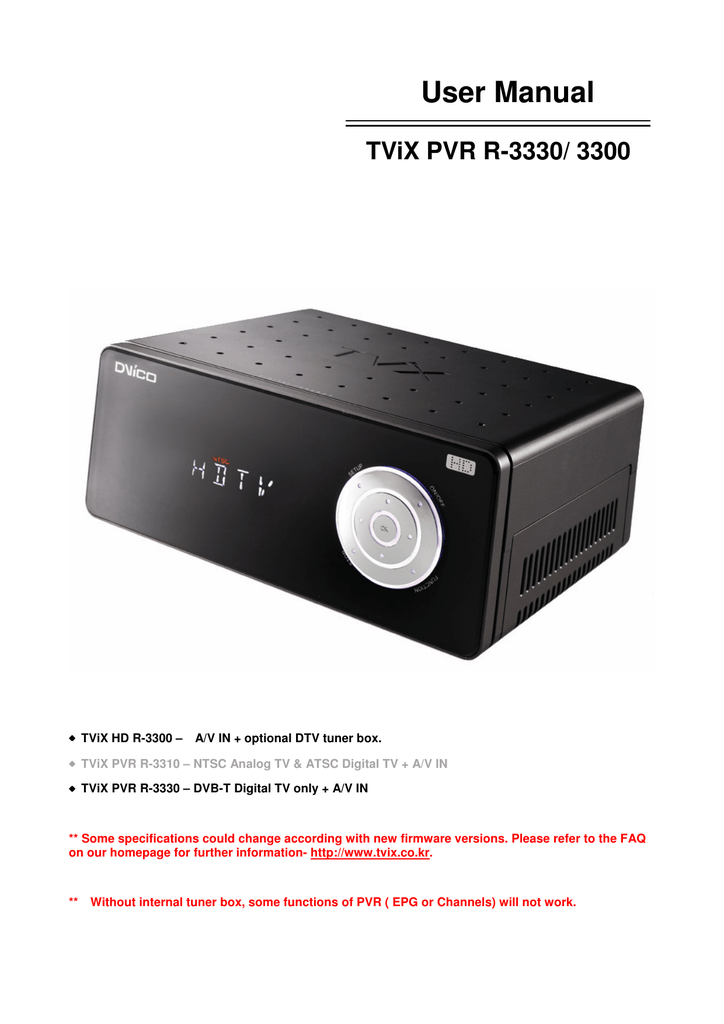
Furthermore, you can only use the second tuner if the picture-in-picture (PIP) function is enabled. Even then, actually watching a program using the second tuner in a PIP box is not enjoyable, nor intuitive, as the functions in the right-click menu of the PIP box are barely functional. We noticed that we could not change channels by right-clicking, nor could we toggle between the main screen and the PIP window. Instead we had to use the main program interface to change channels and to toggle between the windows.
Where the second tuner worked like a charm was when we used the recording scheduler. We were able to record programs from two different channels at the same time. If your favourite programs ever clash, you will be easily able to set the recording scheduler to record them both. One thing to note with the recording scheduler is that it will not work properly if your Windows regional settings are not set to 'English (Australia)' as the date format will produce an error. The scheduler runs in the background and can start your scheduled recordings even if FusionHDTV is closed. When the scheduler kicks in, it stays in the background, so as not to interfere with your current work.
The card also has the capability to boot up your PC in order to start a scheduled recording. It can do this one of two ways. You can connect it to the motherboard where the power switch usually goes and then connect the power switch from your case to the card, or, you can enable 'PME'. PME stands for power management event and will only work if it is featured and enabled in your BIOS. In our BIOS, using a Gigabyte K8NXP-SLI motherboard, this option is listed as 'PME Event Wake Up'. This feature worked in our tests, but there is a caveat: you will have to ensure your system is set to automatically log in to Windows. If you have a password, the scheduler will not be able to log in.
We found the picture quality of the Dual Digital 4 to be very good, without too much blotchiness, and the sensitivity of the tuner was very good. It picked up all of the available digital TV stations in our two test locations (the first location being 2km away from transmission towers, the second location being up to 15km away from those same transmission towers). The signal strength from both test locations was consistently above 90 percent, but we did notice a fair bit of stuttering in both areas.
As for channel changes, it takes a couple of seconds to go from one channel to another. If you want to pause live TV, then you must enable time-shifting first. Just like recording, when time-shifting, we found that we could not toggle between the main channel and the PIP channel. Otherwise the time-shift function worked without problems during our tests. We were able to skip to different parts of a time-shifted program without any stuttering or picture problems.
FusionHDTV will let you record either the current channel you are watching, in MPEG2 mode, or the entire transport stream (tp), which includes all the sub-channels that a network broadcasts. If you record in tp mode, then you can use the supplied FusionCONVERTER software to convert any of the streams into MPEG2, DivX or XviD formats. Depending on the length of the show you want to convert, the power of your CPU and the settings you choose, this conversion can take a long time.
Sound Cards Creative
If you use Windows XP Media Centre Edition, then this card will work as it comes with BDA (broadcast driver architecture) drivers. DViCO also supplies a remote control and an infrared receiver that plugs into a USB port.
All up, while this card did almost everything that we asked of it, we're not overly impressed by the way the FusionHDTV software handles dual tuners. We wish FusionHDTV could use both tuners transparently.
Dvico Sound Cards For Video Editing
-->This article helps to fix an issue in which Windows 10 doesn't install specific drivers for USB audio devices on the first connection.
Original product version: Windows 10, version 1703
Original KB number: 4021854
Symptom
When you connect a USB audio device to a Windows 10 Version 1703-based computer the first time, the operating system detects the device but loads the standard USB audio 2.0 driver (usbaudio2.sys) instead of the specific device driver.
Cause
This issue occurs because the USB audio 2.0 driver (usbaudio2.sys) isn't classified as a generic driver in Windows 10 Version 1703. Therefore, the system assumes that a compatible, nongeneric driver is installed for the device even though the driver is generic.
This issue also causes Windows 10 Version 1703 to postpone the search for other compatible drivers through Windows Update that typically occurs immediately after you install a new device.
Resolution
To fix this issue, use one of the following methods.
Method 1
Dvico Sound Cards & Media Devices Driver Download For Windows 10
To resolve this issue, install update 4022716.
Cards With Sound
Method 2
If the device-specific driver is distributed through Windows Update, you can manually update the driver by using Device Manager. For more information about how to do this, see update drivers in Windows 10.
Method 3
If the device is not yet connected, first install the device-specific driver, such as by using the appropriate installer. After the device-specific driver is installed, Windows 10 will select that driver instead of the standard USB audio 2.0 driver when you first connect the device.
Dvico Sound Cards For Teens
Note
See the device manufacturer's user guide for specific instructions about how to install the driver.
Method 4
If the driver isn't distributed through Windows Update, you can manually reinstall the driver. To do this, follow these steps:
- Install the device-specific driver (see Method 2).
- Open Device Manager.
- Right-click (or tap and hold) the name of the device, and then select Uninstall.
- Restart the computer.
When it restarts, Windows will try to reinstall the device by using the device-specific driver.